Dates
October 2026
5 October 2026 to 25 June 2027

Diploma · ECPV
Learn to direct films by developing your own vision, making creative decisions, and understanding how a professional film set really works. Specialised training, a practical approach, and real contact with audiovisual creation from day one.
El programa
Over the course of three years, the programme offers an in-depth understanding of the directing department and hands-on experience in its key functions, from production planning to on-set execution. Students learn how to coordinate processes, work with the different departments involved in an audiovisual project, and understand how a film is built from the director’s perspective, combining creative vision, organisation, and professional practice.
El contexto
Studying at the Basque Country Film School also means training in Bilbao, one of the most promising audiovisual hubs today. ECPV provides education closely linked to the present-day industry, in a city and a region like Bizkaia that stand out for their commitment to cinema, their variety of locations, and their growing filming activity, creating an especially stimulating environment in which to begin building a career in film.
5 October 2026 to 25 June 2027
Until 25 September 2026
From October to June:
Afternoon schedule from 3:00 PM to 6:00 PM.
More than 1400 teaching hours + joint practices.
Fill in the form below and tell us which program you are interested in.
Our admissions team will send you a complete dossier about your chosen program: content, dates, fees and everything you need to know.
We are here to help. Contact us or book an appointment if you have any questions about ECPV after receiving the information.
Ready to take the next step? Complete the enrolment form at this link and secure your place.
This diploma has been designed for anyone who wishes to explore their artistic concerns within the framework of a cinematographic work. It is highly recommended to have linguistic virtues, general culture, philosophical concerns and the ability to both make an effort and work in a group. Any previous training in audiovisual, art history, communication or fine arts will be beneficial for the student.
In the direction of a cinematographic work. Once you have successfully completed the degree, you will be able to take on the authorship of a fiction project, working together with all the departments involved in the development of a film. You will get to know all the vocabulary, all the techniques and all the debates that enliven cinematographic creation.
In any member of the film direction department of a work of fiction, thus knowing the responsibilities and functions of an assistant director, a scriptwriter or an assistant director.
He is an observer, connoisseur and critic of cinema, having developed methodology, precision and maturity in matters of film research and evaluation.
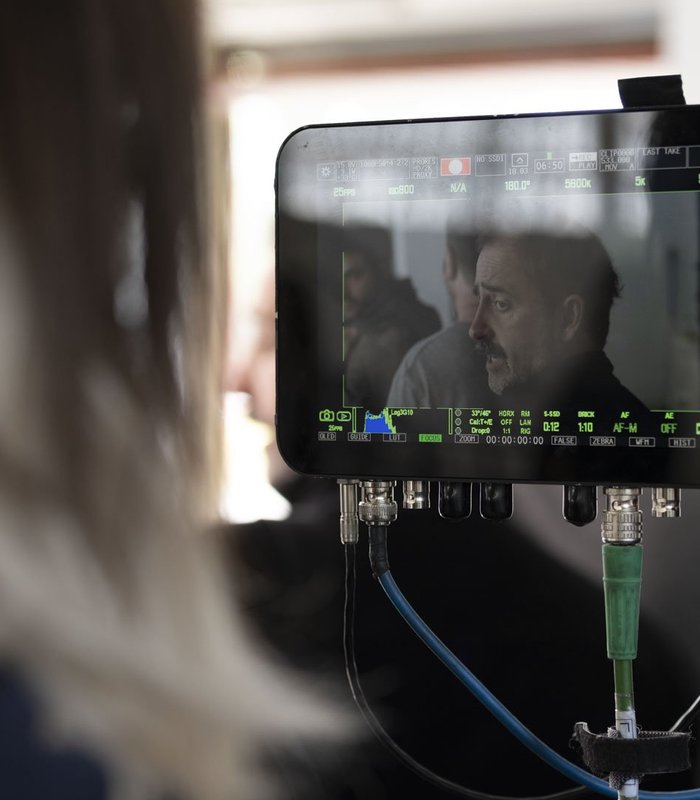
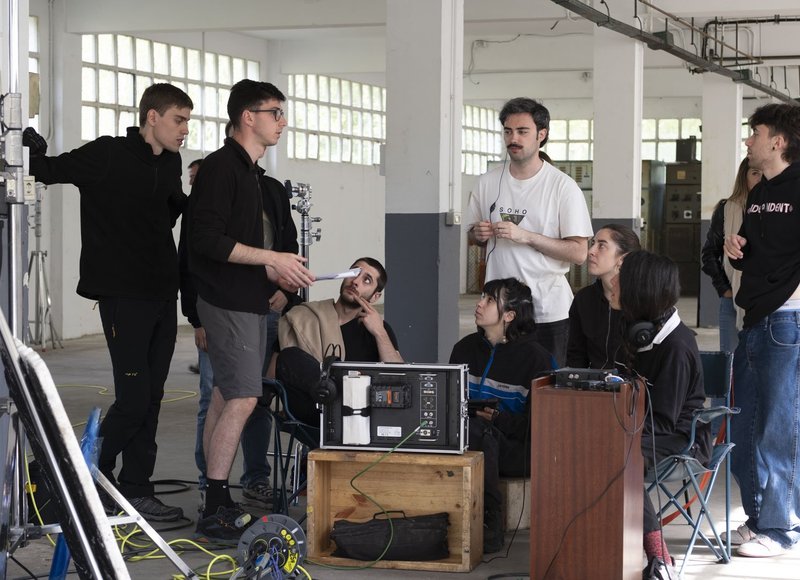
Part of the goal is that each student learns the trade and is prepared to perform any position within the management department in a practical way. That is why, through agreements with various associations and producers, we keep our study plan updated and we can improve it every year.
In this way, we can set up a pedagogical machinery that places the understanding of creative processes and their development as the main value.
Applying what has been learned is one of the main values of our way of teaching. These are complex processes that need to be understood over time and will help shape the minds of tomorrow's talent.
For more information about our study plan, fill out the form and contact us.
Request all the information by filling out the contact form, writing us an email, calling us by phone or visiting us in person.
We will send you all the necessary information so that you can register.


| Nombre | Descripción |
|---|---|
| Dramaturgia | Introducción a la dramaturgia y la estructura narrativa: desde Aristóteles hasta la posmodernidad. |
| Lenguaje | Introducción a conceptos de lenguaje, de lenguaje artístico y de lenguaje cinematográfico. |
| Planteamientos de Dirección | Ética cinematográfica, plasticidad y semántica audiovisual. |
| Análisis fílmico | Del materialismo moderno al abandono posmoderno de la significación. |
| Ontología cinematográfica | De la superficie a la esencia cinematográfica. |
| Filosófía estética | Introducción a la filosofía estética contemporánea. |
| Historia del arte | Introducción a la Historia del Arte. |
| Historia del cine | Del protocine a la hypermodernidad. |
| Crítica cinematográfica | Intención, texto y materialidad del pensamiento crítico aplicado al cine. |
| Dirección de actores | Texto, cuerpo e intención: el trabajo con los actores |
| Trabajos y talleres prácticos | Aplicación a la práctica cinematográfica de los conceptos teóricos vistos en clase. |
| LAB Largometraje | Del cortometraje al largometraje: fundamentos y desarrollo de un proyecto de largometraje. |
| Investigación | De la elección del tema y el marco a la metodología. |
| Producción | Identidad, ética, financiación, presupuesto, distribución y materialidad de la actividad fílmica. |
You'll be trained in directing actors, script analysis, visual storytelling, shot design, shooting planning, and team leadership. And all from a practical, professional, and deeply human perspective. Because before we are filmmakers, we are people telling stories to other people.
The program prepares you to integrate into a real filmmaking environment and, at the same time, to develop your own unique voice. Our graduates are part of nationally and internationally acclaimed productions, and every year new voices emerge from our classrooms to successfully direct their first films.
It's not just about learning to direct, but about becoming someone that cinema needs: a vision capable of connecting technique, emotion, and humanity.
The Diploma in Film Direction lasts three years, with a common first year where you will learn the fundamentals of all departments and begin to specialize in yours, and two more years of specialization, during which students evolve from learning the technical and narrative fundamentals to directing complex and professional projects.
Through continuous practice, active participation in class, guided directing exercises, and the completion of a final project, you will develop both your technical and creative skills.
The program is structured in three stages of development:
1. Exploration
The first year is dedicated to discovering audiovisual language, narrative, and teamwork. It's a space to experiment, make mistakes, and find your own vision.
2. Guidance and Decision-Making
The transition to specialization, guided by tutors who help students define their path according to their skills and creative ambitions.
3. Creation and Consolidation
The specialization year, where theory becomes filming and practice becomes professional experience.
The evaluation assesses your development as a director, your mastery of cinematic language, and your ability to lead a team through all phases of a production. Through continuous evaluation of projects and work, your ability to maintain communication and deliver projects year after year is assessed.
Yes, you will collaborate with students from other specialties and take part in real film shoots, helping you build a strong professional network from the very beginning.
Furthermore, we are members of the two Basque producers' associations, EPE-IBAIA and APIKA, integrating ourselves into the sector's professional network and contributing to initiatives that strengthen the booming cultural industry.
We encourage student participation in programs such as Zineuskadi's Talentuaren Gunea, presenting projects to producers throughout Spain.
Prior experience is not required, although it will be considered an asset. This diploma program is designed for those starting out in film directing.
It's for those who feel that a story doesn't end with the script, but rather when someone watches it and is moved.
It's for those who observe the world with curiosity, empathy, and an almost physical need to translate it into images. If you are moved by how a scene is told through rhythm, silence, gaze, and movement, here you will find the place to transform that sensitivity into cinematic language.
You don't need an artistic background: you need determination, listening skills, and a desire to learn by doing. Directing is not about imposing, it's about guiding; it's not about controlling, it's about inspiring. This diploma program is for those who want to lead teams, develop their own vision, and grow on set, shot by shot, decision by decision.
Yes, the course encourages the development of original ideas. You will be able to submit personal proposals and work on them under the guidance of the faculty.
You will complete several practical exercises, including short films and scenes, covering all phases of the filmmaking process: scriptwriting, shooting, and post-production.
From the first year, you'll be directing scenes, working with actors, finding the perfect shot, and making real decisions. This isn't a course to watch from the sidelines: it's a creative training ground, an artistic community, and a space where you'll learn to lead your own cinematic vision.
The faculty at ECPV is comprised of active professionals working in film, television, advertising, theater, and contemporary art.
Directors, cinematographers, editors, costume designers, production designers, screenwriters, and producers bring the realities of the industry into our classrooms every day.
They don't just teach how to make films, but how to think, how to work, how to manage teams, and how to solve problems that aren't covered in manuals.
Their contribution goes beyond simply sharing knowledge: they guide creative processes, review projects, advise on career paths, and help each student understand their strengths.
At ECPV, faculty and students aren't separated by distant hierarchies; they are part of the community.
We talk, we debate, we question, we build together.
The presence of ECPV-trained staff on high-profile film shoots guarantees a professional standard that directly contributes to the success of each production. This international exposure, combined with the rigor of the training received, demonstrates that the school is a true bridge between learning and active participation in the most demanding audiovisual industry.
Yes, you will receive a diploma from the school certifying your participation and the knowledge acquired during the three years of film directing training.
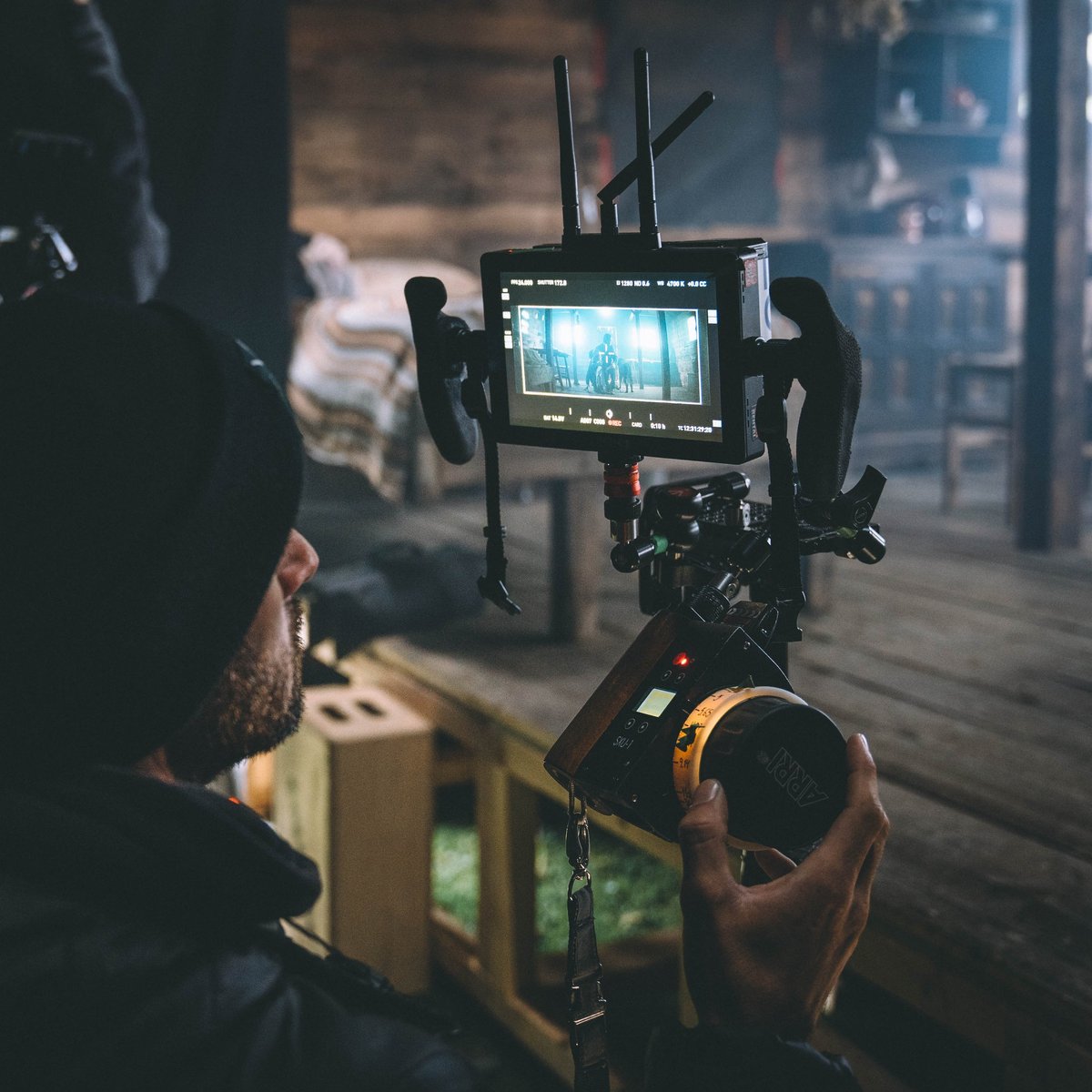
Yes, you will have access to professional cameras, lighting and sound equipment, and editing rooms to carry out your projects following industry standards. Watch facilities
The ECPV provides students with a comprehensive and advanced range of digital and analog film cameras.
These professional tools, used in high-level productions, allow students to become familiar with industry technical standards and work with state-of-the-art equipment from their first projects until the end of their training.